Stump grinding is an efficient way to remove leftover tree stumps using special machines that grind them down to the roots. Many homeowners in West Jordan, UT, choose this service to free up yard space, remove tripping hazards, and get ready for new landscaping. The process quickly turns an unwanted stump into useful mulch.
You can expect a smooth, professional service that makes your yard safer and more attractive, with very little disruption to your property.
What Is Stump Grinding?
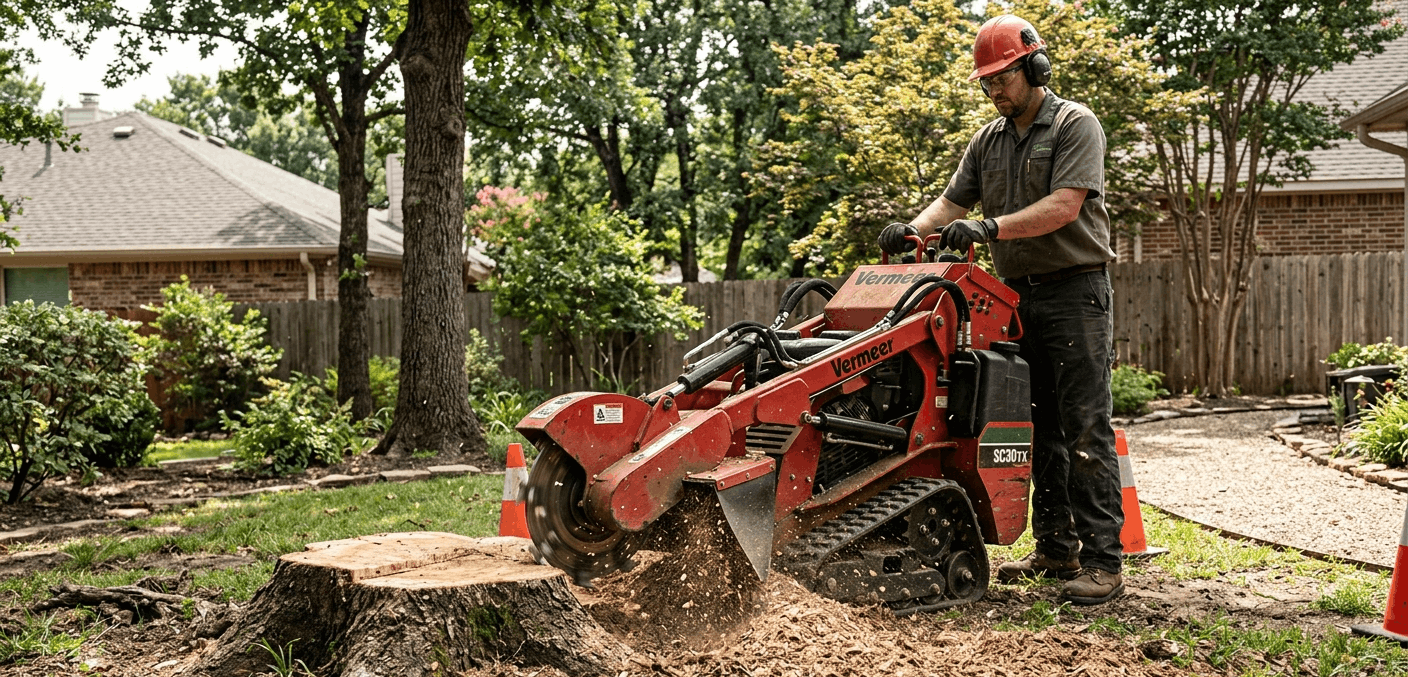
Stump grinding uses a machine with a fast-spinning cutting wheel to turn the stump into small chips. Unlike traditional removal, which pulls out the whole root ball and leaves a big hole, grinding only removes the visible wood. Many homeowners like this method because it avoids major lawn damage, costs less, and works quickly. It also turns the stump into mulch you can use in your garden.
Step-by-Step Stump Grinding Process
Knowing each step of the grinding process helps you see how professionals will care for your property.
Equipment Arrival
The team brings equipment designed for residential yards. At High Climbers, our machines can reach almost any stump, even in tight spots. We do not use large trucks that could harm your lawn, so your property is protected from the start.
Work Area Preparation
The crew puts up screens around the work area to catch debris and wood chips. They also move low branches or lawn furniture to make the area safe. This careful setup keeps your home, windows, and garden safe during the work.
Grinding the Stump
The technician sets up the machine and moves the cutting wheel back and forth to chip away the wood. The stump is turned into small chips in just a few minutes.
Grinding Below Grade
Grinding continues until the machine goes several inches below ground. This makes sure the leftover wood is deep enough to be covered with soil. Grinding below the surface helps your lawn grow back smoothly and keeps the wood from affecting new grass.
Root Area Treatment
After grinding the main stump, the technician also grinds any large roots that stick out. This helps prevent mowing problems later and makes sure the area settles evenly. The rest of the roots are left to break down naturally underground.
Final Cleanup
The team rakes up the wood chips and soil created by grinding. They can pile it up neatly or spread it out, depending on what you want for your yard.
What Factors Affect Stump Grinding Time?
Each tree’s unique traits affect how long the technician works on site.
Stump Size
The diameter of the wood is the primary factor dictating the project timeline. Large, mature trees naturally require more passes with the cutting wheel than smaller decorative trees. Massive trunks take a bit longer to fully process below grade level.
Wood Hardness
Tree species matter; hardwoods like oak resist cutting more than softwoods like pine. Harder woods need a slower, steady approach.
Root Structure
Some trees develop extensive, complex surface root systems that spread far across the yard. Tracking and grinding these extra roots adds time to the overall project. A concentrated, vertical root system is processed much faster than a wide, sprawling network.
Access Restrictions
Stumps located on steep hills, behind tight garden gates, or nestled closely between concrete structures require extra care. Maneuvering the machinery into tight spots takes precision and time. Open, flat front yards allow for the fastest possible setups and completion times.
What Happens to the Wood Chips?
The volume of material produced during the process can surprise property owners, but it offers excellent recycling potential.
Mulch Use
The resulting mixture of wood chips and organic soil makes an exceptional mulch for home gardens. This material helps retain soil moisture, regulates ground temperature, and naturally suppresses weed growth. Homeowners love utilizing this byproduct in their flowerbeds and around healthy trees.
Removal Options
Property owners who prefer a completely clean slate can choose to have the excess material hauled away. Professional teams rake up the bulk of the mixture, leaving the hole filled to ground level while removing the surplus. This keeps the yard looking immaculate and ready for immediate use.
Site Restoration
Once the excess chips are managed, the remaining depression is ready for topsoil and seed. Filling the area with nutrient-rich soil allows you to blend the spot seamlessly with the rest of your lawn. Within a few weeks, fresh grass grows over the old site.
Benefits of Professional Stump Grinding
Investing in professional removal services transforms the safety, health, and functionality of your entire outdoor property.
Improved Safety: Leftover wood creates a continuous tripping hazard for children and pets running through the yard, and it also risks damaging lawnmower blades.
Better Appearance: Removing an old, decaying trunk instantly improves the sightlines in your landscape and increases overall aesthetic value and curb appeal.
Easier Lawn Maintenance: Removing stumps enables straight, efficient mower paths across your yard.
Pest Prevention: Removing decaying wood eliminates a natural magnet for termites, carpenter ants, and beetles, protecting your home's foundation and nearby trees.
These compounding advantages demonstrate why grinding stands as the preferred modern standard for long-term residential landscape maintenance.
Conclusion
Making your yard safer, easier to use, and better looking is simple with professional help. Choosing stump grinding protects your lawn and gives you mulch for future gardening.
The skilled team at High Climbers provides fast, reliable service to restore your yard, making sure you have a beautiful and useful landscape for years to come.
FAQs
How long does stump grinding take?
Most standard projects take between 15 minutes and 2 hours per tree, depending on overall size and specific wood density.
Is stump grinding messy?
Stump grinding does create wood chips, but crews use screens and clean up carefully so your yard stays tidy.
How deep do professionals grind?
Most technicians grind the stump four to eight inches below ground, so you can cover it with soil and grow grass on top.
What happens to roots after grinding?
The roots left deep underground will break down on their own over time and will not cause problems for your lawn.